
Buying Construction Materials & Furniture from China: What to Get and What to Avoid


More and more Singapore homeowners are sourcing renovation materials and furniture directly from China — through Taobao, 1688 and Alibaba, or by flying to factory hubs like Foshan (tiles, sanitaryware, doors) and the Guangzhou furniture markets. The appeal is obvious: prices can be a fraction of local retail, and the choice is enormous. But the savings come with real risks around safety compliance, warranty, sizing and shipping.
Here is a clear-eyed guide to what is worth buying, what to avoid, and the traps in between.
Why People Do It
For big-ticket, low-tech items, the price gap between a Chinese factory and a Singapore showroom can be large — often enough to fund other parts of a rebuild. Direct sourcing also opens up designs and customisation that local stock doesn't carry. Done well, it stretches your budget. Done carelessly, it creates delays, compliance problems and no one to call when something fails.

What's Generally Worth Buying
These tend to offer big savings with manageable risk, especially if you can inspect samples or use a reliable supplier:
Tiles and natural stone (Foshan is a global hub) — bulky and expensive locally, with large savings by the container.
Sanitary ware — basins, WCs, vanities and bathtubs (check water-fitting compliance below).
Furniture and joinery — sofas, beds, wardrobes, cabinetry and feature pieces.
Aluminium and glass doors, mirrors and decorative panels.
Decorative (non-wired) lighting and soft furnishings.

What to Be Careful With — or Avoid
Some items carry compliance, safety or practicality risks that can outweigh the saving:
Electrical and gas appliances — water heaters, hobs, ovens, switches, sockets and certain lights are Controlled Goods in Singapore and must be tested, registered and carry the SAFETY Mark before they can be sold or supplied. Many China-market products are built for 220V Chinese plugs, not Singapore's 230V/50Hz Type-G system, and uncertified goods are both illegal to supply and a genuine fire and shock risk.
Water fittings — taps and fittings should meet Singapore standards and water-efficiency requirements; a licensed plumber may refuse to install non-compliant fittings.
Fire-rated doors and safety-critical items — these need proper certification for use in Singapore; an uncertified 'fire door' is worthless when it matters.
Anything safety-critical, structural, or needing local warranty and service — if it fails, returns and after-sales from a China seller are slow to impossible.
The Hidden Costs and Traps
The sticker price is rarely the landed cost. Budget and plan for:
GST and shipping. Goods imported into Singapore attract 9% GST; there is relief for low-value parcels up to S$400 (CIF) by air or post, with GST now collected at checkout on low-value goods from GST-registered overseas sellers. Above that, GST is payable on import. Furniture and tiles are not subject to customs duty, but sea freight, insurance, customs clearance and last-mile delivery all add up.
Sizing and standards. Chinese sizes, fittings and electrical-box dimensions don't always match Singapore norms — measure carefully, and confirm door sizes, plug types and pipe fittings.
Quality control. Quality varies enormously between sellers; for large orders, a factory inspection or a sourcing agent pays for itself.
Lead time. Sea freight takes weeks, and a delayed shipment can stall your whole renovation. Order early and align delivery with the build programme.
Installation and warranty gaps. A local tradesman may decline to warranty goods they didn't supply, so agree who installs — and who is responsible if something is faulty — before you buy.
Where to Buy: Platforms and Agents
How you buy matters as much as what you buy. The main routes, from most hands-on to most managed:
1688 (1688.com) — China's domestic wholesale marketplace and usually the cheapest, but it is Chinese-language, quotes factory prices, and generally needs a China-based agent or forwarder to buy and consolidate for you.
Taobao / Tmall — huge consumer range for furniture, lighting and decor; often accessed through a buying agent (daigou) or a Singapore parcel-consolidation service.
Alibaba — English-language and export-oriented, with Trade Assurance that protects payment until you confirm the order is correct. Best for larger or custom orders where you want written protection.
Sourcing agents and consolidators — for a fee they vet factories, negotiate, inspect, consolidate multiple suppliers into one shipment and handle export. Worth it for a whole-house order.
Singapore-based China importers — local showrooms that already import tiles, stone and furniture from China. You pay a little more but get a local point of contact, warranty and recourse.
Whichever route you use, keep the money protected: use the platform's escrow or Trade Assurance and avoid paying a factory by direct bank transfer with no safety net.

Shipping: Courier vs Air vs Sea
Three ways to move goods, and the right one depends on size, value and urgency:
Courier (DHL/SF and similar) — fastest and simplest for small parcels; low-value goods up to S$400 (CIF) qualify for GST relief, and GST on low-value goods is now collected at checkout from GST-registered overseas sellers.
Air freight — faster than sea for medium loads, but expensive by weight; usually only worth it for urgent or lighter high-value items.
Sea LCL (less than a container) — you share a container; sensible for a few pieces of furniture or a pallet of tiles.
Sea FCL (a full container) — most economical per unit once you are filling a 20ft or 40ft container, which a whole-house tile-plus-furniture order often does.
Note that the S$400 GST relief applies to air and post only — not sea freight, where GST is payable on the full CIF value regardless. A freight forwarder handles the customs permit (needed per shipment), clearance and the 9% GST. For a landed home, also confirm last-mile delivery: who carries heavy items in, whether they fit through doors and up the stairs, and any extra manpower charge.

Quality Control: How to De-risk an Order
Quality varies enormously between sellers, and a photo is not a guarantee. Before you commit real money:
Order samples first — a tile, a fabric swatch, a finish sample — and approve the actual colour and quality, not a screen image.
Ask for real photos and video of your specific goods before shipment, plus the batch or dye-lot for tiles and stone so colours match across boxes.
Check the seller's track record — transaction history, ratings and export experience — and favour suppliers who have shipped to Singapore before.
For large orders, pay for a third-party pre-shipment inspection; it is cheap insurance against a container of defects you cannot return.
Put everything in writing — exact dimensions, tolerances, materials, finish, quantities and packing — so there is a spec to hold the supplier to.
Getting the Specs Right for Singapore
Many problems are not quality issues — they are compatibility issues. Confirm these against Singapore norms before ordering:
Electrical — Singapore runs 230V/50Hz on the Type-G (three-pin) plug; China-market goods are built for 220V and Chinese plugs, and switch/socket back-boxes differ. Keep anything wired local and SAFETY-Mark certified.
Water fittings — taps, mixers and cisterns should meet Singapore standards and water-efficiency (WELS) rules, or a licensed plumber may refuse to install them.
Doors — confirm leaf and frame sizes, swing and hardware; Chinese standard sizes do not always match local door openings.
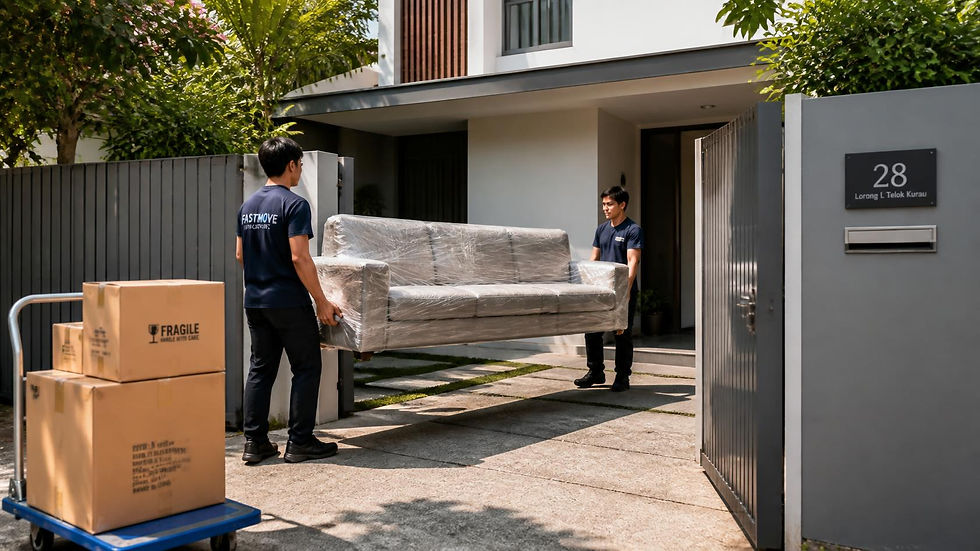
Furniture fit — check bed and mattress sizes (Chinese sizes differ from local/UK sizes) and, crucially, that large sofas and wardrobes fit through your doorways, staircase and lift-less landed layout.
Tiles — specify rectified/calibrated tiles and consistent sizing so your tiler gets tight, even joints.
A Smarter Way to Source
You don't have to choose between cheap-and-risky and expensive-and-safe. Many homeowners get the best of both by buying low-risk, high-saving items (tiles, stone, furniture, aluminium doors) from China while keeping safety-critical, compliance-bound items (electrical, gas, water heaters, fire doors) local and certified. Better still, coordinate sourcing with your builder so deliveries, sizes and installation all line up with the construction schedule.
How Hitomo Helps Clients Source from China
This is not just theory for us. Over the years, Hitomo Construction has sourced a great deal directly from China for our clients' projects — tiles and natural stone, sanitaryware, furniture and joinery, aluminium and glass doors, and more. We have built up real expertise in what is worth importing and what is best kept local and certified, how to vet suppliers and inspect quality before shipment, how to handle freight, GST and customs clearance, and how to time deliveries so they arrive in step with the build.
That hands-on experience means our clients get the savings without the guesswork — no compliance traps, no wrong-size surprises, and no shipment stalling the whole renovation. When we manage a rebuild, sourcing is coordinated with the construction programme from day one.
Planning Your Landed Home Rebuild?
A landed rebuild rewards careful planning and the right team — including a builder who can source smartly on your behalf. Hitomo Construction guides Singapore homeowners through feasibility, design, regulatory submissions, sourcing, construction and handover, drawing on years of experience buying materials and furniture both locally and directly from China.
Reach out for a no-obligation discussion. Contact Hitomo Construction today to get started.


